Winter Puppy Care – Tips to Keep Your Pup Safe & Warm
Winter Puppy Care – Tips to Keep Your Pup Safe & Warm
Hey ho, humans! It’s me, Mochi — your favorite (and prettiest) Cocker Spaniel — here to school you on everything you need to know about winter puppy care. If you think your adorable little fluffball can magically survive icy sidewalks, snow drifts, and freezing noses without guidance… I’m telling you — it’s not going to happen!
Think of this as your no-excuses guide to keeping your puppy cozy, safe, and happy, while only whining at you a little, instead of a lot.
1. Preparing Your Puppy Before the First Snow
Before the sidewalks turn into icy white carpets, it’s crucial to get your puppy ready. Tiny paws and noses are not born ready for winter, and trust me, watching your puppy slip dramatically is not the kind of cute Instagram moment you want repeated… hundreds of times.
Puppy’s First Cold Adventures
When it comes to winter puppy care, slow and steady wins the race.
- Start with 3–5 minute outdoor sessions when it’s only crisp, not Arctic.
- Gradually increase time outside, introducing different surfaces: grass, pavement, and slightly frozen patches. Each texture is a mini training ground for your puppy’s paws.
- Watch for signs of cold stress: shivering, paw lifting, dramatic whining, or your puppy staring at you like you personally betrayed them. If these appear — retreat indoors immediately!
Fun Fact!
According to research from the American Kennel Club, young dogs are 30% more susceptible to frostbite than adult dogs, so these early training sessions are crucial.
Winter Coats and Clothing
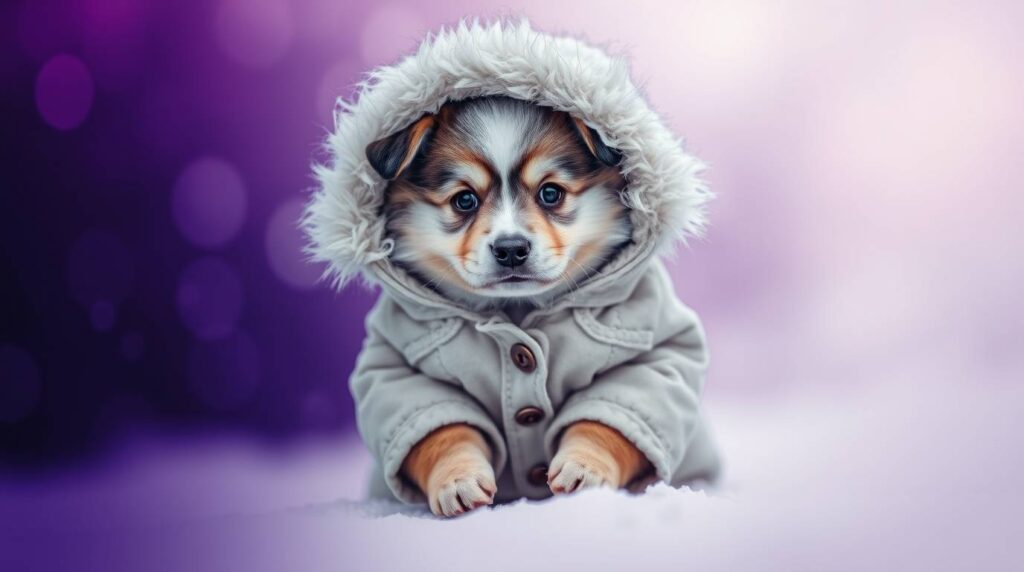
A good coat can be a game-changer—especially for small breeds, short-haired pups, or any dog under six months who still thinks snow is a mysterious, cold enemy. A cozy coat isn’t just cute (though it definitely earns you extra “aww” points); it’s a practical shield against frostbite, icy winds, and dramatic paw lifts mid-walk.
Here are some tips for picking the perfect winter outfit for your pup:
- Cover the chest and belly: These areas get cold fastest, and trust me, your puppy will not hesitate to show their displeasure if neglected.
- Snug but flexible: Think of it like Goldilocks—the fit should be “just right.” Too tight, and your pup feels like a sausage in a jacket. Too loose, and it flaps around like a tiny superhero cape in the wind.
Material matters: Fleece or softshell fabrics are your friends. Avoid cotton—it’s cute, but it absorbs snow and rain faster than a toddler spills juice, leaving your pup soggy and miserable.
Pro tip!
Let your puppy wear the coat indoors for a few minutes before venturing outside. Otherwise, expect a full-on “I refuse to walk” protest.
Introducing Boots
Salt, ice, and mysterious chemicals are the ultimate winter paw enemies. Think of boots as paw armor — stylish, functional, and your pup’s best defense against dramatic limping and miniature snowball toe attacks.
Step 1: Start Indoors
Before venturing into the frosty abyss, let your puppy sniff, stomp, and even nibble on their new boots. Yes, chewing is part of puppy logic — apparently, taste-testing is a mandatory step in winter preparation. Don’t worry, it’s normal.
Step 2: Short Outdoor Trials
Begin with tiny outdoor adventures, just a few minutes at first. Let your puppy walk across grass, pavement, and lightly frosted paths. Watch carefully — if they trip, flap, or execute a full-on “I refuse to walk” routine, that’s normal winter puppy drama. Gradually increase time outside as your pup becomes more comfortable.
Step 3: Fit Matters
Check the fit carefully:
- Too big = wobbly, slipping paws (and possibly dramatic snow belly slides).
- Too tight = epic whining and a look that says “human, how dare you betray me”.
Goldilocks approach: just right, snug but flexible, so your puppy can prance, and perform occasional snow zoomies without disaster.
Fun Fact!
Paw pads, ears, and tail tips are the most frostbite-prone areas in winter. Using boots plus a paw balm can prevent painful cold injuries and save you from excessive limp-watching and indoor drama.
Short, Frequent Walks
Winter walks are not epic quests — they are mini missions of survival, warmth, and avoiding frostbite.
- Frequency > distance: 4–6 mini-walks a day beats one long, icy expedition.
- Timing matters: The warmest part of the day, usually midday, is ideal. Early morning frostbite o’clock? Hard pass.
Leash safety: Frozen ponds and slippery sidewalks are not your puppy’s personal skating rink. Keep your furball on leash to avoid accidental acrobatics.
Extra Tip!
After walks, always wipe the paws to remove salt, chemicals, or ice chunks. Think of it as post-adventure spa care — your puppy deserves it, and your floors will thank you too.

2. Protecting Your Dog’s Paws
Winter is sneaky. One minute your pup’s trotting around happy, the next their paws are frozen, cracked, and dramatically lifted like they just discovered the icy betrayal of sidewalks. Let’s fix that.
Why paws crack:
- Dry winter air: Sandpaper for tiny paws. Seriously, who signed up for that?
- Salt and chemical de-icers: Not exactly a gourmet treat.
- Ice balls forming between toes: Like nature’s tiny snowball traps. Ouch.
Before stepping outside, rub a little pet-safe paw balm, or even some Vaseline on your pup’s pads. Boots help too, especially on icy or salty sidewalks. Your pup might look like a tiny runway model, but at least their paws won’t hate the snow!
Signs Your Pup’s Paws Are Unhappy
- Lifting paws repeatedly like they’re auditioning for ballet
- Licking or chewing at pads like they just discovered a mystery snack
- Limping or refusing to walk (this is a hard “no” — don’t ignore it)
Catch these warning signs early!
3. Indoor Activities for Winter Puppies
Don’t panic! Your pup can still burn off zoomies indoors, and keeping them mentally busy is part of solid winter puppy care.
Here’s how to turn your living room into a winter wonderland of fun:
- Nosework games: Hide treats around the house with safe winter scents—cinnamon, pumpkin, turkey jerky. Watching your pup sniff, hunt, and triumph? Priceless.
- DIY snuffle mat: A fluffy mat plus hidden treats equals hours of mental gymnastics. It’s like a puzzle for tiny paws, and they’ll feel like the smartest detective in town.
- Indoor toy games: Roll balls or toss plush toys across the carpet. Zoomies are allowed, encouraged, and mandatory. Furniture may survive, maybe, possibly.
- Brain exercises: Short training sessions, puzzle toys, or obedience games for 10–15 minutes can tire your pup more than a full snowy walk. Who knew mental work could be so exhausting (and cute)?
Even when the cold keeps your pup from exploring outside, these indoor adventures keep them happy & tired.
4. Warm Beds and Cozy Spots
Cold paws? Shivering tail? Nope, not on your watch. Part of smart winter puppy care is making sure your pup has the warmest, coziest spots in the house (and outdoors, if needed).
- Indoors: Think raised beds, soft blankets, and draft-free corners where your pup can curl up like a tiny marshmallow. Bonus points if the sun hits just right for maximum nap luxury.
- Outdoors (if necessary): Make it insulated, wind-protected, and raised above the ground—because soggy, icy bedding is basically a puppy horror show.
Extra blankets are never a bad idea. The more layers, the better. Your pup will be warm, snug, and ready to conquer the world… or at least dream about zoomies in the snow.
5. Nutrition and Hydration
Winter zoomies burn calories like a tiny furry furnace on turbo mode, so food portions may need a slight bump to match all that energy. Don’t just toss kibble and hope for the best — your pup needs proper fuel to survive snowball-chasing missions.
Consider slightly higher-calorie meals if your puppy is particularly active outdoors. Puppies under six months may require smaller, more frequent meals to maintain energy throughout the day.
Water is just as important as kibble. Make sure it stays fresh and doesn’t turn into an ice cube. Even in freezing weather, your pup needs to stay hydrated. Heated water bowls or frequent refills can save you from early morning “thirst protests.”
And, of course, your vet is your best guide here. Always check with your vet before increasing calories or making winter diet adjustments. Puppies have different metabolic needs than adult dogs, and even minor changes can make a huge difference in energy, growth, and health.
Fact!
No, your puppy does not magically get calories from chewing snow!
6. Bathing and Grooming
Part of good winter puppy care is keeping them clean, but without turning them into a squeaky-dry raisin.
- Bathing: Limit baths to avoid drying out their skin. Nobody likes itchy, flaky paws or a cranky pup.
- Shampoo: Use a moisturizing puppy shampoo — think of it as a spa day for tiny furballs.
- Dry thoroughly: Make sure the coat is completely dry before heading back outside. Wet fur + winter chill = frozen drama.
- Post-walk check: Always check paws and fur for ice balls or salt residue. A little wipe-down prevents discomfort, licking, and the dreaded paw-licking protest.
7. Winter Hazards
Winter is fun… until it’s not. There are sneaky seasonal hazards that can turn your winter puppy adventures into mini emergencies if you’re not careful.
Antifreeze (Ethylene Glycol)
- What it is: Antifreeze is a chemical found in cars to prevent engines from freezing in cold weather. It often leaks onto driveways, sidewalks, or street edges.
- Why it’s dangerous: Extremely toxic — even a tiny lick can cause kidney failure and death in dogs.
- Tip: Always keep your pup away from puddles, spills, or suspicious shiny liquids. If you suspect ingestion, contact your vet immediately.
Salt & De-icers
- What they are: Rock salt, calcium chloride, and other chemical de-icers are sprinkled on sidewalks and roads to melt ice.
- Why it’s dangerous: They can irritate paw pads, cause burns, and make your pup sick if ingested (licking paws is a thing).
- Prevention: Use boots or paw balm, and always wipe paws after walks. Think of it as a post-walk spa treatment.
Frostbite & Hypothermia
- Signs to watch for: Shivering, pale or grayish skin (especially ears, paws, and tail tips), lethargy, or refusing to move.
- What to do: Get your pup indoors, warm them gradually with blankets, and monitor for worsening symptoms. Severe cases = vet visit.
- Pro tip: Puppies lose body heat faster than adults — even brief exposure to extreme cold can be risky
Puppy Snow Problems Solved! Q&A
Congratulations, human — you made it to the end of your winter puppy care masterclass!
Follow these tips, keep the paws warm, the tummies full, and the zoomies supervised… and maybe, just maybe, your puppy will survive the season without turning into a tiny snow zombie. You’re welcome.
I could tell you more, but there’s a shadow on the wall… must investigate.
Sniffs and licks!
~ Mochi ~
Woof!
I’m super cute and smart, but I’m not a vet!
This guide is just me sharing tips and doggy wisdom. For serious stuff—health, medication, or severe anxiety—go sniff out a real veterinarian!